Ironwork and Blacksmithing Galleries
Last updated: October 23, 2023
Blacksmithing Main Page
Powerhammer Page
Home
Contact Us
Ironwork and Blacksmithing Tool Pictures from Mexico, Europe and Here at Home
Page Contents:
1. Introduction
2. Isla Mujeres Ironwork Pictures
3. The Avalon Grand, Cancun Ironwork Pictures
3.1 Isla de Cozumel Ironwork Pictures
4. Misc. Blacksmithing-Related Pictures of Interest To Me
5. European Blacksmithing Tool Gallery Pictures
Introduction
Forging and fabricating of decorative/utilitarian structures can take many forms, as you already know if you came
to this page.
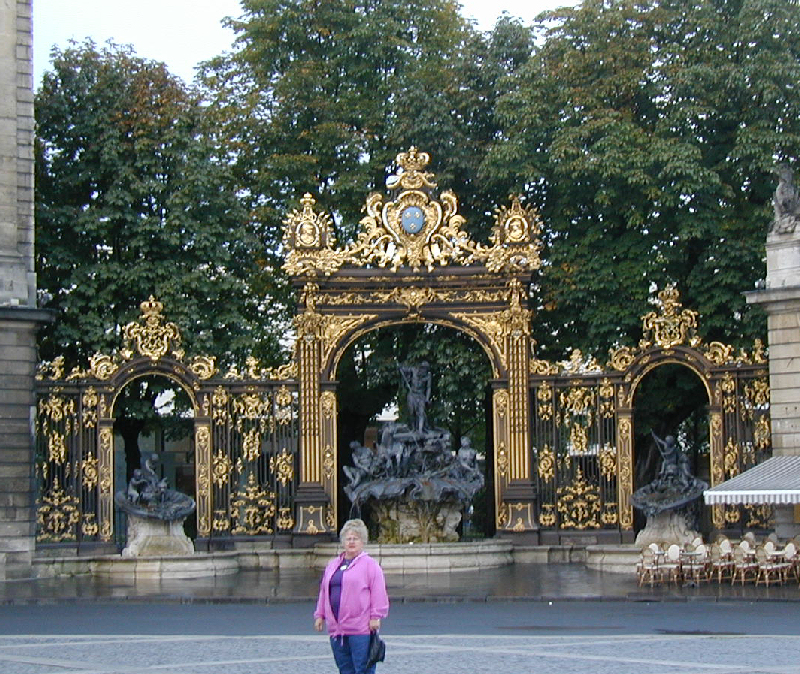
Stanislaus Square, Nancy, France: Top of the line
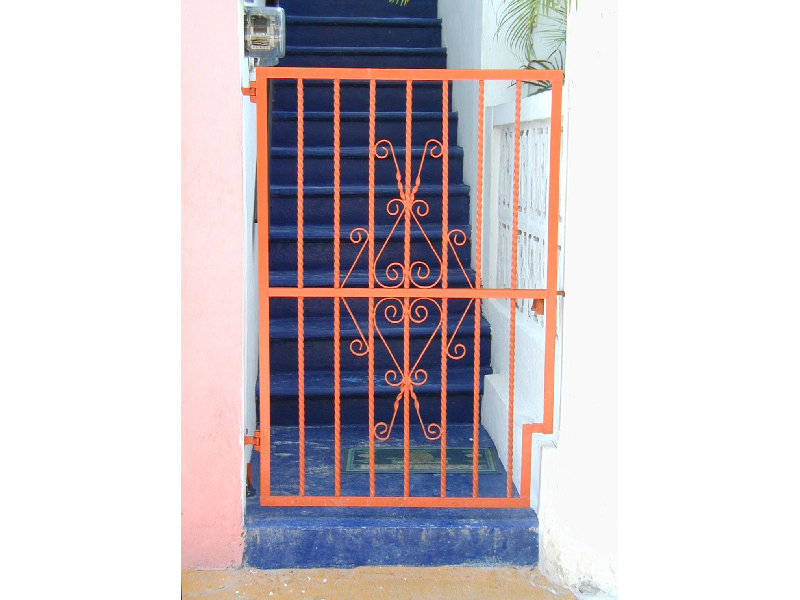
Simple Isla Mujeres residence Gate. Adequate for the job at hand.
The two pictures above are simply meant to contrast high and low end archetectural ironwork. What follows in this
section of my
"pictures" page is a short photo essay of low to medium end ironwork that I have seen on the east side of the Mexican
Yucatan
pennisula. "Low End" does not make ironwork bad; just less artistic, in my mind. "Quality" in ironwork, as in everything else,
deals with
how well the product or service delivered meets the requirements of the customer.
You can buy many books that catalog this or that famous smith to see examples of beautifal forged artwork that also
serves to protect, direct, support etc..
I guess I am talking mostly about gates, railings, grills, tables and that sort of thing.
What I want to do here is to show a few of the differences between "utilitarian" and "easy on the eyes".
For example:
Several years ago, I engaged a local tour guide to take me to visit the "best" blacksmiths in Cancun, a city of about
600,000 souls at the time. He took me to 2 shops. They were both doing a big business in gates, railings and window
grills. Neither one had any forging capability. The larger one did have a forge in the corner, but it had not been
used in many years and nobody in the place knew how to use it. This tells me the current state of customer needs for
that area, I think. Please correct me if I am wrong.
I am pretty sure that no customer of ironwork says to their supplier: "I want an ugly gate to keep the bad guys out
of my yard".
or-
"I want you to weld up some supports and put a top on a coffee table and I don't care WHAT it looks like".
But where defense or utility is the first priority and cost is THE key factor, a "form follows function" piece is what
will likely be the result.
If, however, the client wishes to add some degree of artsy "design", then, let the games begin!
The artist/blacksmith/fabricator has many "elements" in his repetiore' from which to choose. And once the basic required
dimensions of the piece are in hand, he can begin to build them into a pleasing and/or cost effective design.
As the design complexity increases, so does the cost to the client, of course.
Isla Mujeres Ironwork Pix
The first Isla Mujeres gallery shows many examples where the fabicator uses a very few inexpensive elements to move a tiny
bit away from the soley utilitarian.
Thank God for the Hossfeld bender scroll jig, they must think. That's the device that makes the simple "bent the easy way"
1 1/4 turn scrolls with the flat spot at the end.
You will still see a lot of the "Hossfeld Scroll" in the second Isla Mujeres gallery, but you do see an occasional attempt
to do something to treat the end of the scroll.
Iron Work on Isla Mujeres, Mexico, Page 1
Iron Work on Isla Mujeres, Mexico, Page 2
Avalon Grand Ironwork Pix
Moving on to the Avalon Grand section, you begin to see a few snub end scrolls and a few scrolls where the inner end has
been widened by forging.
Not that scrolls are the only element is use, but the scroll has been around for a long, long time and it makes a good
example of the continuum between a totally non-forged Hossfeld Scroll and a well executed "Blown-over Scoll."
In this "Avalon Grand" gallery, you see even more attention given toward pleasing the eye. Somebody in the interior
decoration business consulted an artist-blacksmith for this place, even if they didn't take all his or her advice.
Iron Work at the Avalon Grand, Cancun Mexico
Cozumel Ironwork Pix
Added in the spring of 2012, this Cozumel ironwork section shows again, a wide variety in design. As with the other island
galleries, most of the ironwork is of the "public" or outdoor type, since, as a tourist, I don't get to see the insides of
the more upscale residences that might hide the real treasures of the blacksmith's art.
Iron Work on the Island of Cozumel Mexico
Just some pix on several subjects:
A few Miscellaneous Pictures
European Blacksmith Tool Gallery
From a couple of visits to Europe via the ABANA European Tour program, I extracted the pictures that showed
tools and tooling that I thought were different from what us USA-types have in our shops.
European Tooling Galleries